


Circulation Heaters
Circulation Heaters
Circulation Heaters
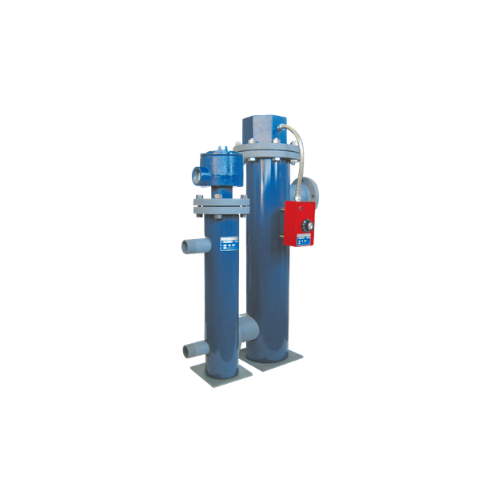
Circulation heaters are highly efficient heating cells designed to heat liquids and gases as they flow through a pipe body. These units are compact and easy to install. They offer primary heating or act as a backup/start-up heating source to natural or forced circulation heater systems.
The core of a circulation heater is a screw plug immersion heater or a flanged immersion heater that is installed into a pipe vessel. The vessel is thermally insulated and a stainless steel or rust-proof painted outside metallic jacket protects the insulating material. The vessel is connected to a system through inlet and outlet NPT threaded fittings or flange connections.
Specifications of Circulation Heater
The circulation heater design concept at Bucan incorporates all the rugged and durable features of a tubular heater with the flexibility of a heat exchanger.
Design specifications may require a unit to meet the boiler and pressure vessel code. Bucan can supply electric circulation heaters units that are designed, built, and registered to the ASME code, with the applicable code stamps.
Contact us to learn more about Bucan’s industrial circulation heaters in Canada.
- Applications
- Selection
- Features
- Tips
Typical Heating Applications of Circulation Heater
- Hydraulic Oils
- Steam Super Heating
- Alkaline Cleaning Solutions
- Oils, Including Light to Heavy
- Water & Water Based Solutions
- De-mineralized or De-ionized Water
- Gasses (Air, Nitrogen, Natural Gas, Butane, Etc.)
Contact Us to buy electric circulation heaters & circulation heater water in Canada.
Standard Flanged Circulation Heaters
| Nominal vessel size | A | C | D | E | F | G | Inlet/outlet size (NPT) |
| 3″ | Heated section of the heater | 5.5 | 7.5 | A + 2xC + 2.25″ | 9.5 | 5.5 | 1″ |
| 4″ | 5.5 | 9.0 | 10.5 | 6.25 | 1 1/2″ | ||
| 5″ | 6.75 | 10.0 | 11 | 7 | 1 1/2″ | ||
| 6″ | 6.75 | 11.0 | 12 | 7 | 1 1/12″ | ||
| 8″ | 6.75 | 13.25 | 13.5 | 8.5 | 2″ |
Standard Screw Plug Circulation Heaters
| Nominal vessel size | A | C | D | E | F | G | Inlet/outlet size (NPT) |
| 1″ | Heated section of the heater | 1 1/12″ | 3 3/4″ | A + 2xC + 2.25″ | 5″ | 5″ | 1″ |
| 1 1/4″ | 1 1/12″ | 3 3/4″ | 5″ | 5″ | 1″ | ||
| 1 1/2″ | 1 1/12″ | 3 3/4″ | 5″ | 5″ | 1 1/4″ | ||
| 2″ | 2 1/2″ | 3 3/4″ | 5 1/12″ | 5 1/2″ | 1 1/4″ | ||
| 2 1/2″ | 2 1/2″ | 3 3/4″ | 5 1/2″ | 5 1/2″ | 1 1/4″ |
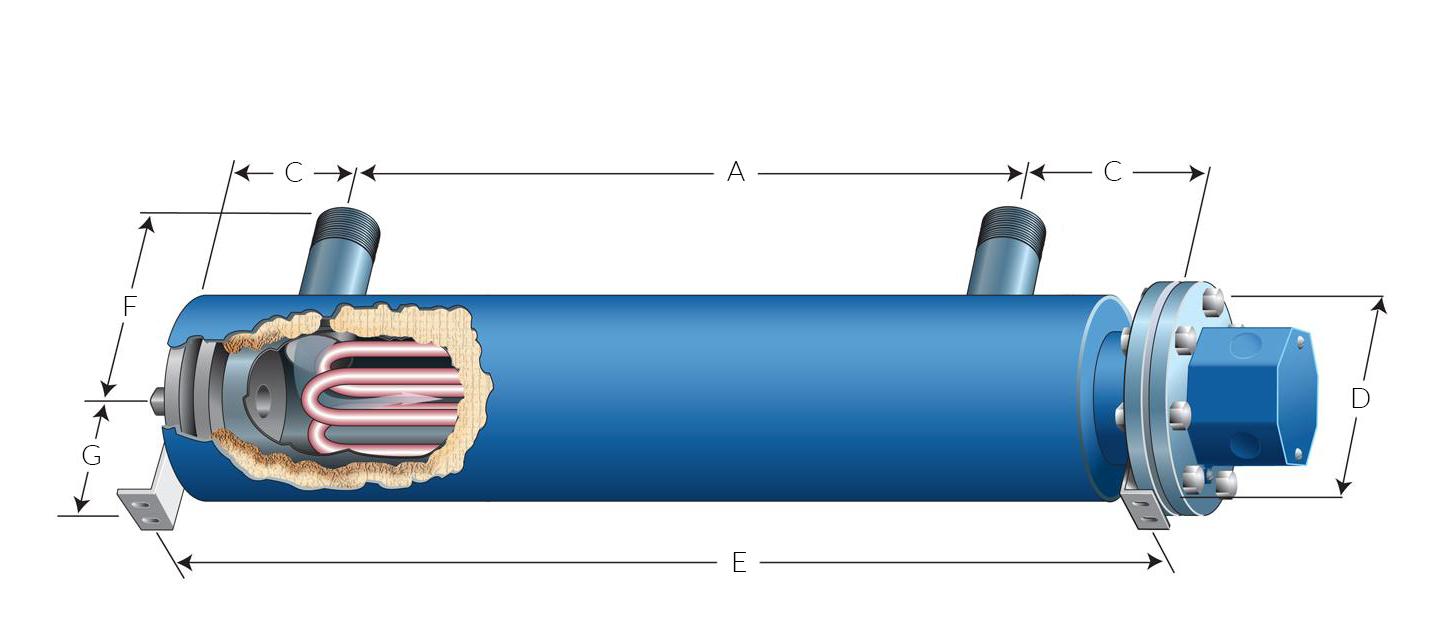
Standard Flanged Circulation Heaters
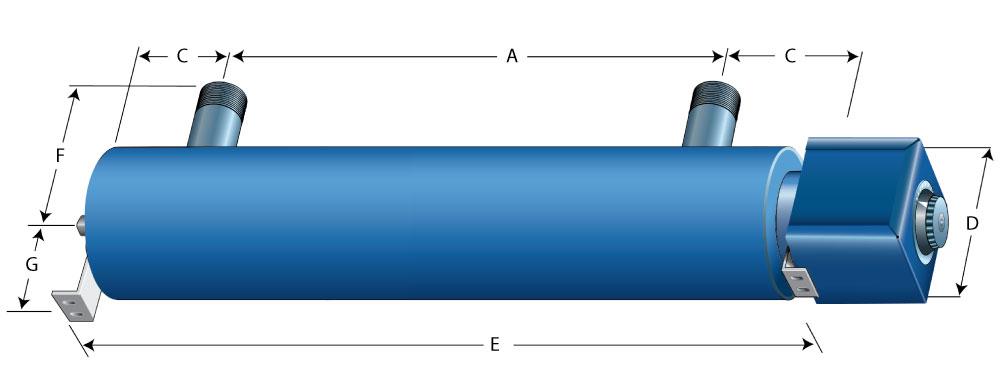
Standard Screw Plug Circulation Heaters
For design help call our technical staff and we can help guide you through the selection process of electric circulation heaters.
- Sheath materials – selected to suit the liquid or gas being heated
- Connections – NPT nipples or flanged inlet and outlet connections
- Flange pressure ratings – selected based on the temperature and pressure design conditions
- Terminal Enclosures
- General Purpose (NEMA 1)
- Weather Resistant (NEMA 4)
- Hazardous Location (NEMA 7)
- Passivation – when required
- Support frames – for stand-alone mounting
- Vessel materials – steel, stainless steel, or other specialty metals
- Cross flow baffles – to improve heat transfer characteristics, when required
- Controls – built in thermostats, thermocouples, and high limit thermocouples
1.Vertical Mounting with terminal housing facing upwards
The inlet pipe should be at the bottom.
This configuration will maintain the heating element immersed in liquid at all times.
2.Vertical Mounting with terminal housing at the bottom
The inlet and outlet pipes should be installed at the top, oriented upwards, with the inlet pipe close to the terminal box. This configuration will maintain the heating element immersed at all times when liquids are heated and minimize the terminal housing temperature when gases are heated.
3.Horizontal Mounting
The inlet pipe should be at the bottom. This configuration will minimize the terminal housing temperature.
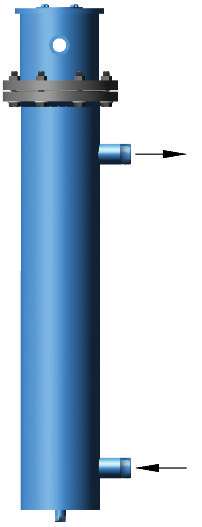
1.(Recommended for liquids)
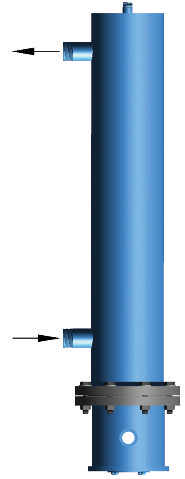
2.(Recommended for gases)
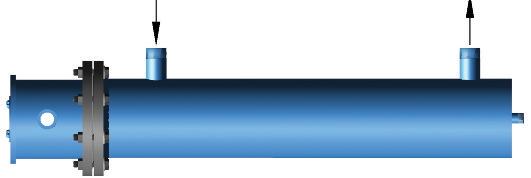
3.(For liquids or gases)
FAQs

What is a circulation heater?
A circulation heater draws liquid from a vessel and continuously passes the solution over an electric heating element to maintain heat.
Where are circulation heaters used?
They are used in any application that has an inlet and return for liquids that need to be heated
What is the difference between a circulation heater and an immersion heater?
A circulation heater is external to the process and the immersion heater is directly in the tank and requires no process flow.
How do electric circulation heaters work?
They work by passing a liquid over an enclosed heating element and returning to the vessel or tank.
What are industrial circulation heaters used for?
Typically they are used for creating a flow of heated liquid to raise temperature and create agitation.
What industries rely on industrial circulation heaters?
They can be used in many different industries, but plating tanks and chemical cleaning processes are very common.