

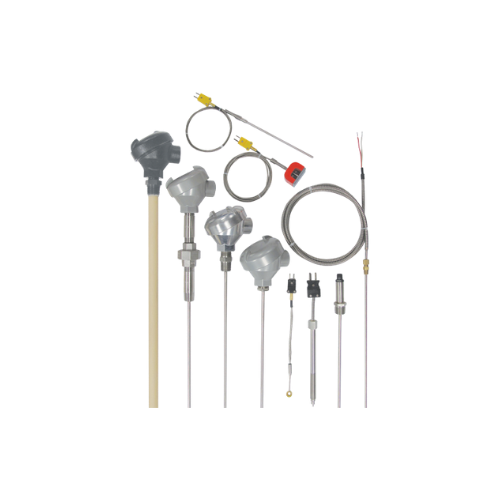

Temperature Sensors
Temperature Sensors
Temperature Sensors
Thermocouples
A thermocouple is a temperature sensor made of two dissimilar metal wires that form a junction at one end. As the temperature of the junction varies, the millivolt output (generated by the temperature gradient along the wires) is interpreted by a temperature controller. There are different types of thermocouples; each type has a different combination of metals that makes it suitable for a specific temperature range and environment. The most common are the J, K, T, E and N types. The section of a thermocouple that is used to monitor temperature is usually protected with a metallic shell. The wire junction is either exposed out of the shell-tip, internally attached to the sealed shell-tip (grounded), or isolated from the sealed metal casing (ungrounded). The metallic protective shell can be filled with compacted MgO. This construction (MI style) gives structural strength and durability. MI thermocouples can be welded or brazed to heating element sheathes and can also be field-bent to suit specialized mountings. Additionally, thermocouples can have a basic tube-and-wire construction (TW style) which is mostly used in the plastics industry. Many optional mounting arrangements are available with this style; these include bayonet mount, adjustable depth, nozzle melt, and ring or shim mounting.
RTD’s
Resistance Temperature Detectors (RTDs) are sensors that have resistors which change resistance with temperature variations. A controller monitors that change and converts it to temperature. Several different materials are used to make RTDs, the most common being platinum. RTDs are available in two basic constructions; the thin-film (-150°F to 1000°F) and the wire-wound (-250°F to 1100°F). RTDs can come with 2, 3 or 4 lead wires. The ones with 3 or 4 wires can have relatively long lead lengths without loss of temperature accuracy.
- Specifications
- Tips
- Standard Products
- Wiring Diagrams
Thermocouples
The tables below show recommended temperatures, environments, accuracies as well as color codes. It’s good to know that maximum temperatures are defined not only by the type of a thermocouple but also by the gauge of its wire.
| Type | Composition | Temperature Range ºF (Rec.) | Application Suitability (Bare Wire) | |
|---|---|---|---|---|
| Positive Leg | Negative Leg | |||
| J | Fe | 55% Cu 45% Ni | 32 to 1400 | Vacuum, reducing or inter atmospheres. Limited use in oxidizing atmospheres (heavy gauges(. |
| K | 90% Ni 10% Cr | 95% Ni, 2% Al 2% Mg, 1% Si | 32 to 2300 | Used mostly above 1000ºF. Oxidizing and inert atmospheres. Not used in vacuum or low-oxygen atmospheres. |
| T | Cu | 55% Cu 45% Ni | -300 to 700 | Recommended for moist atmospheres. Vacuum, oxidizing, reducing or inert atmospheres. |
| E | 95% Ni, 2% Al 2% Mg, 1% Si | 55% Cu 45% Ni | 32 to 1500 | High EMF output per degree. Suitable for oxidizing and inert atmospheres. |
| N | 84.1% Ni, 14.4% Cr 14% Si, 0.1% Mg | 95.5% Ni, 4.4% Si 0.1% Mg | 32 to 2300 | Alternative to “K” type thermocouples. High resistance to oxidation. |
| Type | Temperature ºF Versus Accuracy | Maximum Temperature (Rec.) for Thermocouple Probe Diameter & Wire Gauges | Negative Leg Color | Positive Leg Color | Jack/Leg Color | ||||
|---|---|---|---|---|---|---|---|---|---|
| 0.062″ | 0.125″ | 0.188″ | 0.25″ | ||||||
| 30 AWG | 24 AWG | 20 AWG | 16AWG | ||||||
| J | 32 to 520 530 to 1400 | +/- 4ºF +/- 0.75% | 600ºF | 700ºF | 800ºF | 900ºF | Red | White | Black |
| K | 32 to 559 560 to 2300 | +/- 4ºF +/- 0.75% | 1400ºF | 1600ºF | 1700ºF | 1800ºF | Red | Yellow | Yellow |
| T | -300 to -90 -91 to 270 271 to 700 | +/- 1.5% +/- 2ºF +/- 0.75% | 300ºF | 400ºF | 500ºF | 500ºF | Red | Blue | Blue |
| E | 32 to 640 641 to 1500 | +/- 4ºF +/- 0.5% | 700ºF | 800ºF | 900ºF | 1000ºF | Red | Purple | Purple |
| N | 32 to 560 561 to 2300 | +/- 4ºF +/- 0.75% | 1600ºF | 1700ºF | 1700ºF | 1700ºF | Red | Orange | Orange |
RTDs
RTDs are specified through the following criteria:
- Construction (thin film or wire wound)
- Sensor material (Pt, Cu or Ni)
- RTD resistance (100Ω/Platinum most common)
- Accuracy (IEC751 standards are common)
- Wire configuration (3 wire most common)
- TCR value (0.00385Ω / Ω / °C most common)
IEC751 standards specify the accuracy for 100Ω platinum RTDs with 0.00385Ω / Ω / °C TCR as:
- Class A: +/-0.15°C at 0°C, increasing linearly to +/-1.15°C at 500°C
- Class B: +/-0.30°C at 0°C, increasing linearly to +/-2.8 °C at 500°C
Thermocouples Versus RTDs
| Criteria | RTDs | Thermocouples |
| Recommended Temperature Range | -300°F to 1000°F | -300°F to 2300°F |
| Accuracy (Typical) | Excellent (+/- 0.3°F to +/- 2°F) | Medium (+/- 1°F to +/- 10°F) |
| Stability | Extremely Stables (0.1°F drift/year) | Variable |
| Response Time | Slow (1-50 seconds) | Fast (0.1-10 seconds) |
| Linearity | Almost Linear | Non-Linear |
| Mechanical Shock / Vibration | Not Suitable | Suitable |
| Electrical Noise Problems | Limited Susceptibility | Susceptible |
| Excitation | Yes | No |
| Cost | High | Low |
Wiring Tips
- To be cost-effective, thermocouple extension wires can be of a lower grade (have lower ambient temperature limits), but they should be of the same material as the thermocouple wires. For long distances between sensing points and instruments, (100 ft. or more), transmitters can be used.
- Copper terminal blocks, as well as lugs or splices, can be used in a thermocouple circuit, provided that the negative and the positive legs are at the same temperature.
- Standard copper wires are used as RTD extension wires. Two-wire RTDs should be used only for short runs. For long runs, it is preferable to use 3 or 4 wire RTDs. For distances longer than 100 ft, using transmitters could be a solution.
- The insulation of thermocouple and RTD wires should be compatible with the environment in which they will be used.
- As the electrical signals generated by thermocouples and RTDs are very low, it is recommended to shield their extension wires.
- Thermocouple and RTD wires should not run in conduits that contain power lines.
Bucan Thermocouples can be made in the configurations shown below with basic Tube & Wire or Mineral Insulated designs. Most of the designs can be manufactured with the use of RTDs as well. The two first characters of each style part number shows the nature of the sensor. TW stands for (Tube and Wire thermocouple), MI for (Mineral insulated Thermocouple), RT for (tube and wire RTD) and RM for (Mineral insulated RTD). Standard Bucan RTD sensors use Class B platinum RTDs that have 0.00385 Ohm/Ohm/°C TCR (Temperature coefficient of resistance).

Ring Lug
TW01

Screw Tip
TW02

Shim Style
TW03

Spring Bayonet
TW04, MI04, RT04

Armor Bayonet
TW05, MI05, RT05

Basic Mini
MI06

Standard Probe
TW07, MI07, RT07, RM07

Fixed Bayonet
TW07S, MI07S, RT07S, RM07S

Compression Fitting
TW07C, MI07C, RT07C, RM07C

Standard 45°
TW08, MI08, RT08, RM08
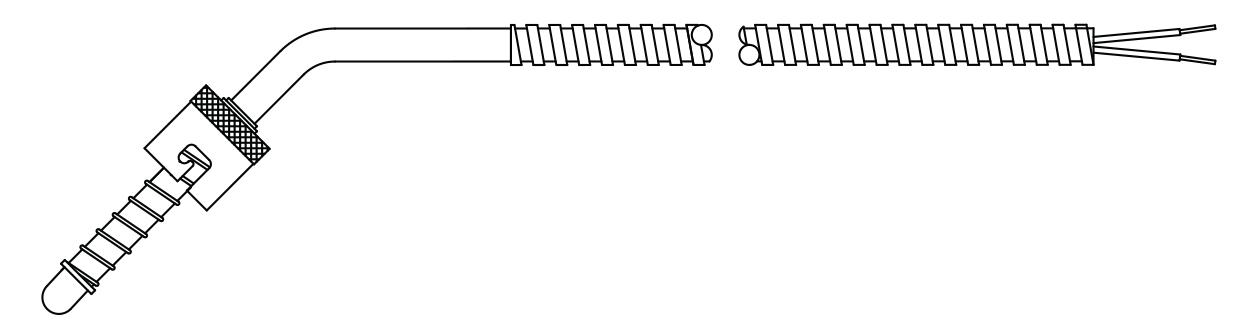
Fixed Bayonet 45°
TW08S, MI08S, RT08S, RM08S

Compression Fitting 45°
TW08C, MI08C, RT08C, RM08C

Standard 90°
TW09, MI09, RT09, RM09
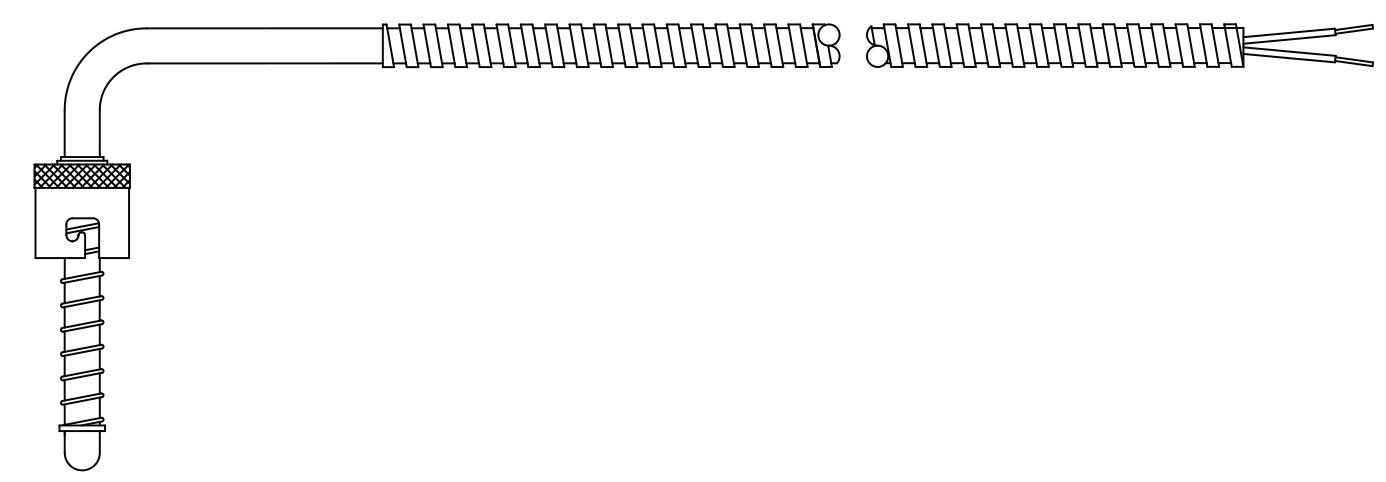
Fixed Bayonet 90°
TW09S, MI09S, RT09S, RM09S
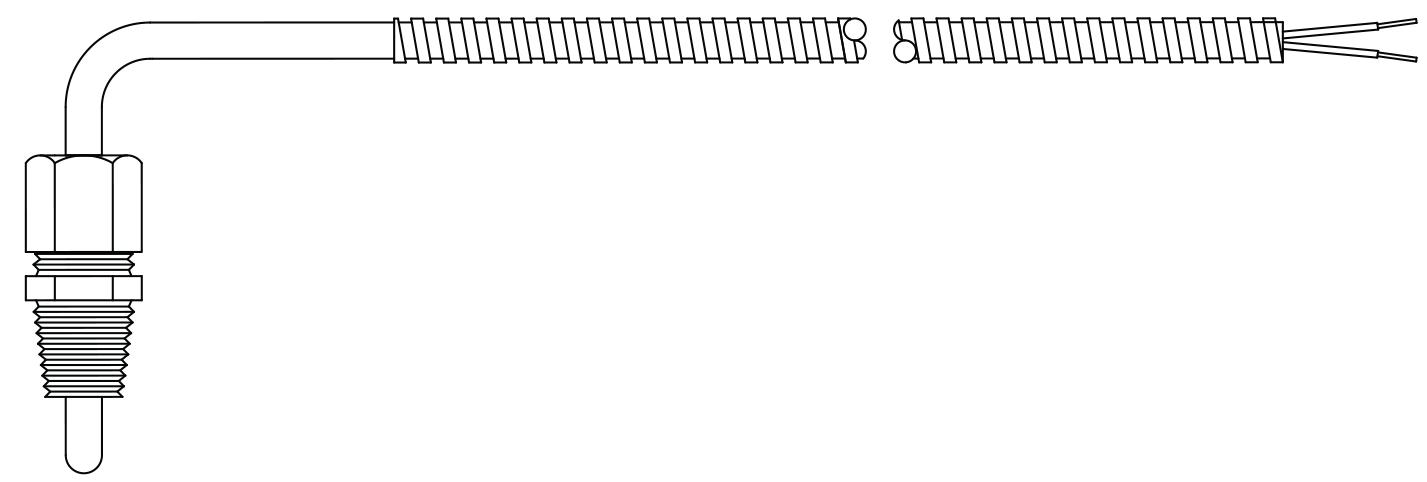
Compression Fitting 90°
TW09C, MI09C, RT09C, RM09C

Rigid Probe Plug
TW10P, MI10P, RT10P, RM10P

Rigid Probe Jack
TW10J, MI10J, RT10J, RM10J

Fixed NPT
TW11, MI11, RT11, RM11

Spring Loaded NPT
TW12, MI12, RT12, RM12

Hose Clamp Style
TW13, MI13

Melt Bolt Style
TW14, MI14, RT14, RM14

Magnet Mount
TW15, MI15, RT15, RM15

Rigid Housing (Style 16)
TW16 / TW17, MI16 / MI17, RT16 / RT17, RM16 / RM17
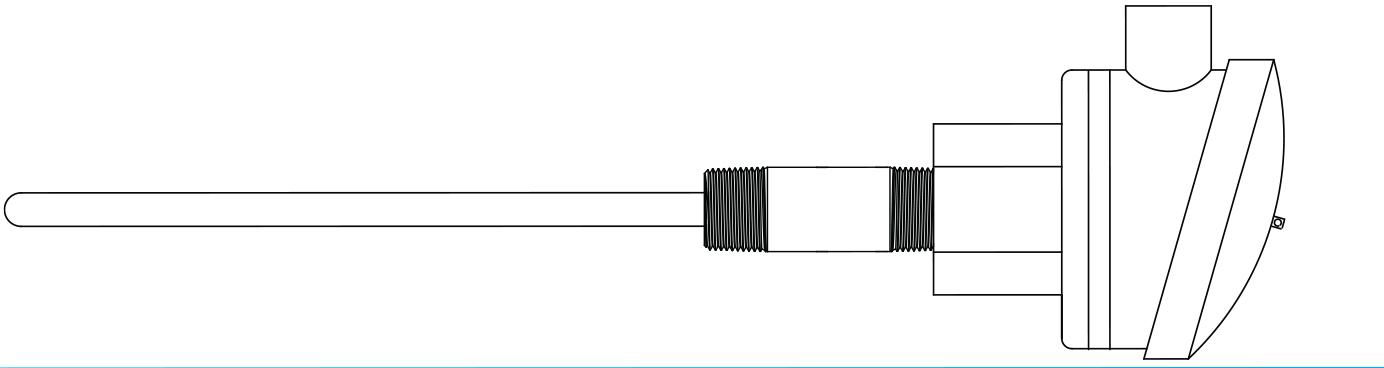
Rigid Pipe Extension
TW018, MI018, RT018, RM018

Rigid Union
TW019, MI019, RT019, RM019
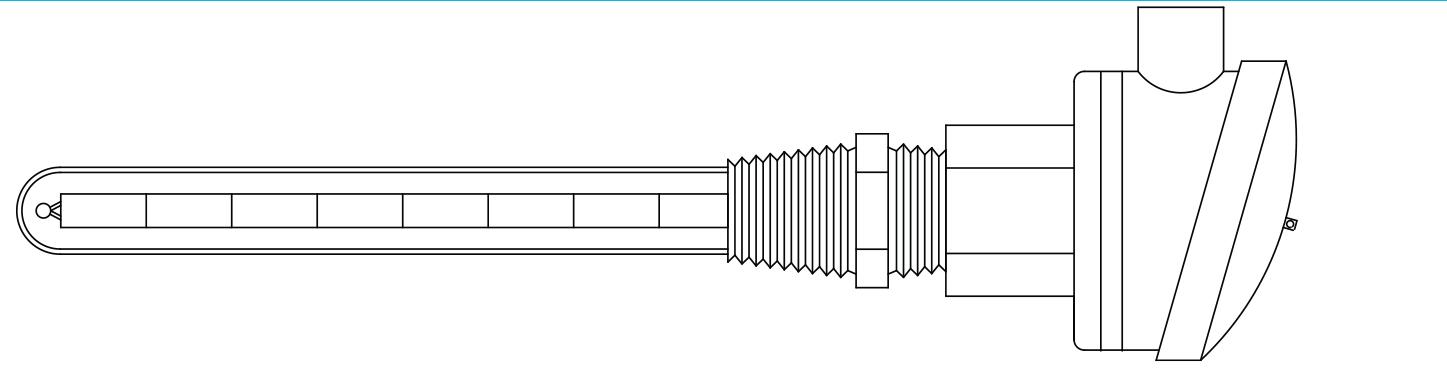
Protection Tube
TW20, MI20
For specifications, please check product catalogue
Download PDFTwo, three and four wire configurations for RTDs

FAQs

Why are temperature sensors used?
To read the active temperature of a process.
How many types of temperature sensors are there?
There are many sensors including Thermocouples, Rtds, and thermistors
What is the most accurate type of temperature sensor?
All are accurate, but RTD’s are typically the most accurate.
What is the difference between Class A and Class B RTD accuracy?
The accuracy is based n the tolerance of the resistance.
Can temperature sensors survive high-pressure vacuum environments?
If the sensor is sealed, it will work in a vacuum application.
Does Spring Loading improve the accuracy of temperature sensors?
Spring loaded thermocouples add pressure to the probe area and will yield better results.
What is the industrial control system?
A full system to read and monitor and engage power to a heater.
Are Bucan control panels fully CSA-US approved for industrial use?
Yes they can be CSA-US approved
Can these panels support multi-stage control for large heater banks?
Yes they can be built to specific requirements.
Can I integrate motor starters into my custom heater control panel?
This requires special equipment but can be designed as required.