
Flexible Heaters
Silicone Rubber Heaters
Silicone Rubber Heaters
Flexible Heater
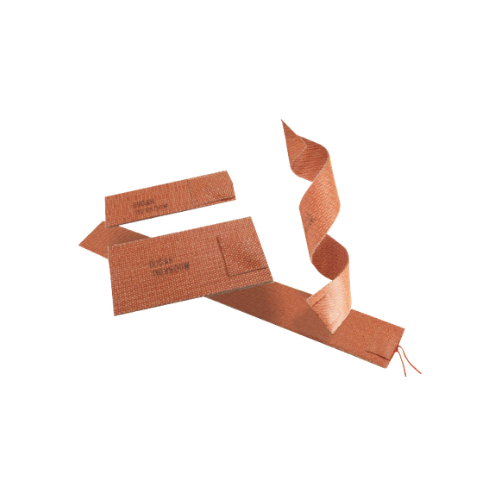
Silicone rubber heater are thin, flexible, and lightweight. They can operate between -70°F and 450°F (up to 392°F CSA certified). A fiberglass grid reinforces the silicone laminates making silicone rubber heater rugged and dimensionally stable. The heating circuits inside these heaters are designed to have uniform distribution and because of their proximity to the heated surface, they transfer heat in a rapid, uniform and efficient manner. Silicone rubber heater are moisture and chemical resistant; they can be bonded to flat or curved surfaces and can be built with many features such as: thermostats, temperature sensors or thermal fuses.
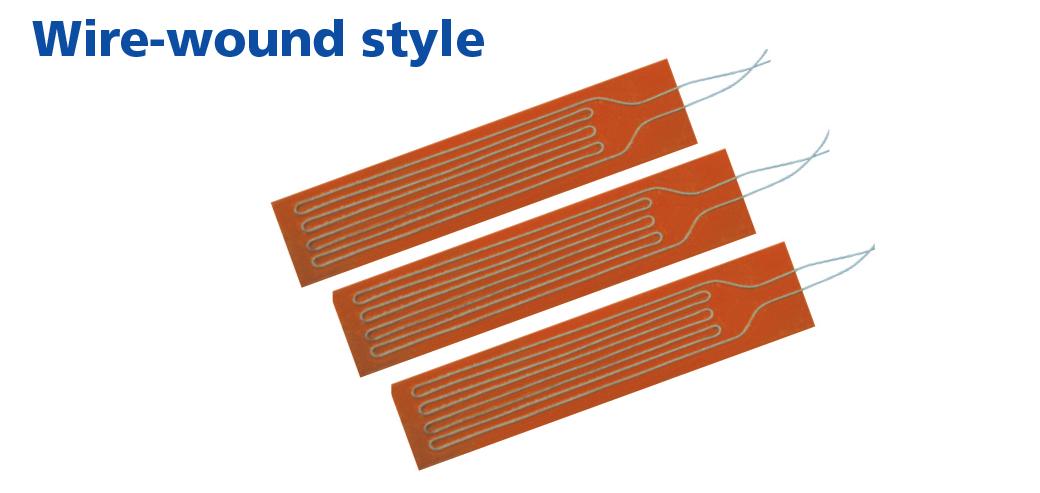
Silicone rubber heater are not suitable for vacuum, radiation, and continuous exposure to oils. Silicone rubber heater can be manufactured with two types of heating circuits; wire-wound style and etched-foil style. Each construction has its unique characteristics and should be selected accordingly. Wire-wound circuits are formed by creating a specific pattern with resistance wire (single or multi-strand) which is wound around a high temp core for strength and flexibility. The etched-foil circuit is produced by chemically etching a resistive circuit out of a nickel based alloy resistance foil (0.0005in-0.004in thick) in a clean room process similar to the production of printed circuit boards. Etched-foil circuits are more suitable for complex heat distribution patterns and because of the larger surface area coverage of their resistive flexible heating elements (75% of the surface), these circuits can have higher watt-densities compared to wire-wound circuits.
*Please consult the factory
- For possible length and width combinations
- For longer or wider dimensions
| Specifications of Flexible Heater & Silicone Rubber Heater | ||
|---|---|---|
| Wire-wound | Etched-foil | |
| Max Length* | 144″ | 22″ |
| Max Width* | 37″ | 10″ |
| Thickness | 0.06″ / 0.12″ | 0.03″ / 0.06″ |
| Max Operating Temperature | 450°F Intermittent 392°F Continuous | |
| Max Voltage | 600 VAC 125 VDC | |
| Resistance Tolerance | -5 / +10 % | |
| Wattage Tolerance | -10 / +5 % | |
| Dimensional Tolerance | Up to 6″ +/-0.030 6″-12″ +/-0.060 12″-36″ +/-0.120 Over 36″ +/-1 | |
- Applications
- Selection
- Accessories
- Terminations
- Optional Features
Typical Heating Applications of Silicone Rubber Heater:
- Photo Processing Equipment
- Freeze Protection
- Computer Equipment
- Medical Equipment
- Condensation Prevention for Instruments & Equipment
- Curing of Plastic Laminates
- Semiconductor Processing Equipment
Contact Bucan flexible heater manufacturers to learn more about flexible heating elements or Silicone rubber heaters.
Selection of Silicone Rubber Heater (Flexible Heater)
*Depending on temperature and application.
| Silicone Rubber Heaters | Wire wound circuit | Etched foil circuit |
| Max Length | 144″ | 22″ |
| Max Width | 37″ | 10″ |
| Thickness | 0.06″ / 0.12″ | 0.03″ / 0.06″ |
| Max Operating Temperature | 450°F Intermittent 392°F Continuous | |
| Max Voltage | 600 VAC / 120 VDC | |
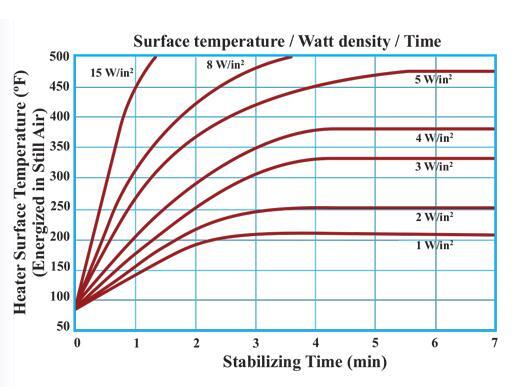
| Watt Density | Up to 10 W/in²* | Up to 30 W/in²* |

Attachment Methods
RTV adhesives
In the field, a strong bonding to application surfaces could be achieved by using room temperature adhesive pastes. Red coloured RTV 106 and transparent RTV 116 are the two types of adhesives available. Both these RTV materials are adequate for temperatures up to 450°F.
Factory vulcanization
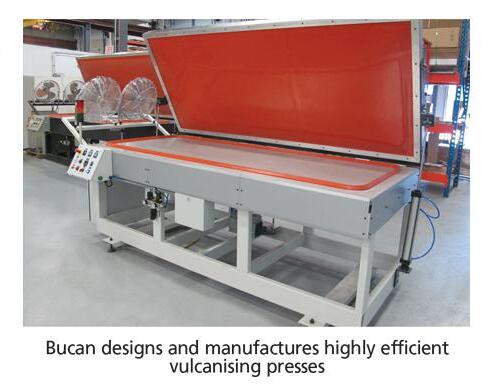
This is the most efficient method to bond a heater to a surface. Using high temperature and pressure, a silicone rubber heater can be vulcanized to a surface. However, bonding through this method can be carried out only in the factory.
Pressure sensitive adhesive
Silicone rubber heater could be made with a thin layer of high temperature (320°F) adhesive backing. This adhesive, which can easily bond to practically any surface, is supplied with a protective cover, which can be easily removed before applying the heater to any surface. Temperature and watt density restrictions should be maintained when PSA is used. Please consult factory.
Mechanical fasteners
When a silicone rubber heater is wrapped around an application, the ends of the heater can be fastened by attachments used on fabrics. Eyelets with lacing cords, Velcro hook and loop, metallic fasteners with springs, and independent straps are the most commonly used fasteners.
Thermostats, Sensors, and Thermal Fuses
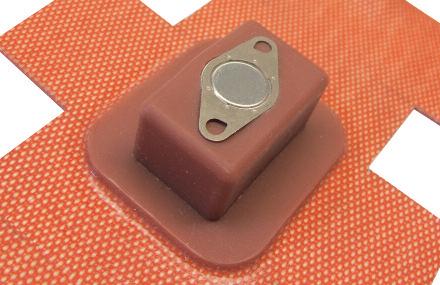
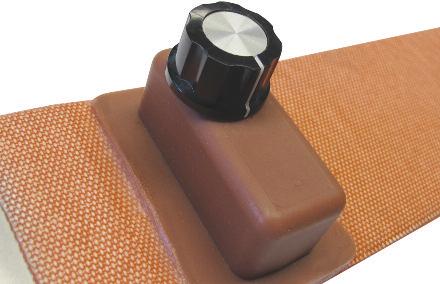
Silicone rubber heater can accommodate process or safety features such as pre-set or adjustable thermostats which can be mounted on the heater to monitor its temperature or positioned over a cold section to monitor the temperature of the heated part. Thermostats are wired directly into the heater circuit or can be wired separately (Pilot Duty) when the voltage or wattage of the heater exceeds the thermostat range.
| Adjustable Thermostats | ||
|---|---|---|
| 100ºF-165ºF | 120/240 VAC | 1600W Max |
| 70ºF-205ºF | 120/240 VAC | 1600W Max |
| 75ºF-375ºF | 120/240 VAC | 1600W Max |
| Pre-set Thermostats | ||
|---|---|---|
| (Open-Close) | 125 VAC/15A | 250 VAC/8A |
| 60º-40ºF | 120º-90ºF | 200º-170ºF |
| 85º-67ºF | 140º-110ºF | 250º-220ºF |
| 110º-80ºF | 150º-120ºF | 300º-270ºF |
*For tolerances please consult factory
*For ambient temperature sensing, pre-set thermostat sensing side is exposed to the air.
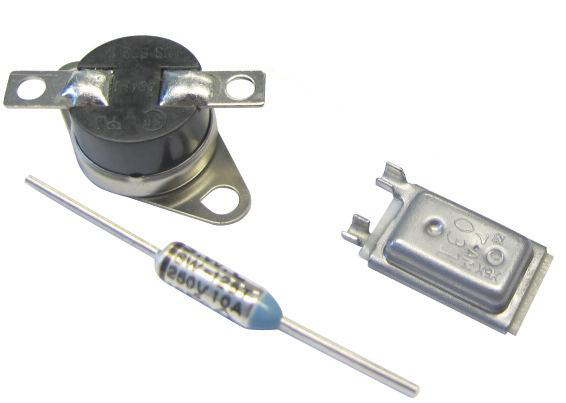
Silicone rubber heaters can also accommodate other temperature sensors such as: thermocouples, RTDs and thermistors for use with an external temperature controller. They can also be supplied with non-resettable thermal fuses to protect heaters from reaching predetermined temperatures.

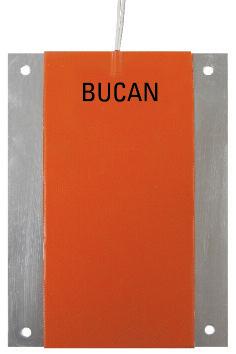

Lead wire styles of Rubber Heater
Silicone rubber heater come only with lead-wire terminations. Two styles are available:
1.Teflon or silicon lead wires
These leads are either sandwiched between the silicone layers or exit on top of the heater. A small patch is placed on the point of exit to provide extra protection. This causes the formation of a slight bump at the point where the wires are attached. To eliminate this problem, the attachment between the internal resistance wire and the lead wire could be made at an external no-heat tab.
2.Power cables
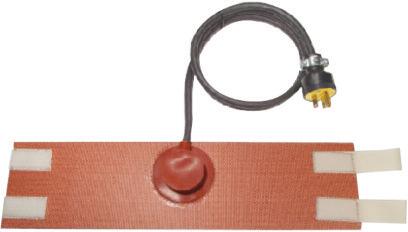
When silicone rubber heater is used independently in an industrial application, they can be made with power cables that exit from a silicone transition box attached to the heater. Proper electrical plugs are available with the power cables.
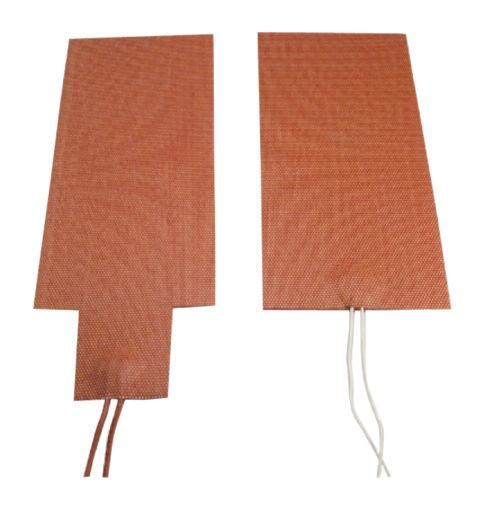
Teflon or silicon lead wires
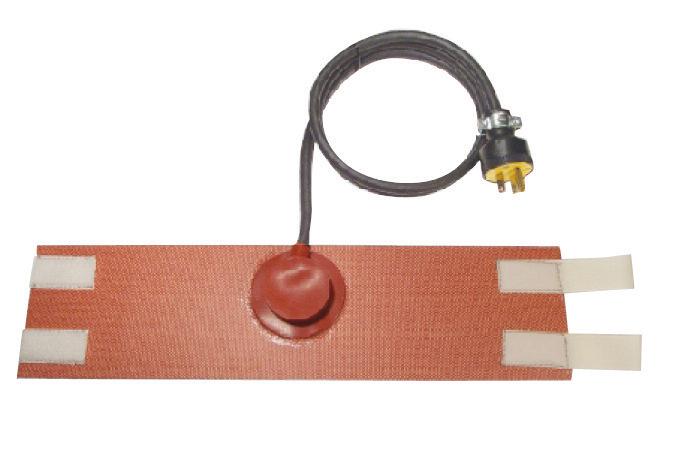
Power cables
Features of Silicone rubber heater (Flexible Silicone? Heaters)
- Holes and Cut-outs almost anywhere on a heater
- Complex shapes for special applications
- Grounded metallic layer for electrical shock protection
- Distributed wattage or multi-zone heating patterns
- Silicone sponge rubber cover for thermal insulation
- Aluminum Foil Backing to increase heat dissipation

FAQs

What is a flexible heater, and how does it work?
A flexible heater is an electric resistor with a flexible, rubber or Kapton Insulation layer.
How do silicone rubber heaters handle high temperatures and moisture?
Silicone heaters are Ideal for Moist environments because they are vulcanized together to protect the electrical circuit.
Can flexible heating elements be customized for curved surfaces?
Silicone Heaters can be designed in just about any shape that can be drawn and or cut.
How do flexible silicone heaters improve efficiency and safety?
Flexible heaters can be very efficient if they are designed to fit precisely to the surface of a mating part
How to choose a reliable, flexible, or silicone rubber heater manufacturer
It is best to work with a knowledgeable heater partner for your design requests.