
Flexible Heaters
Kapton Heaters
Kapton Heaters
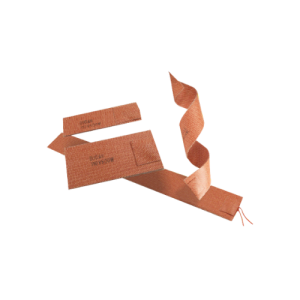
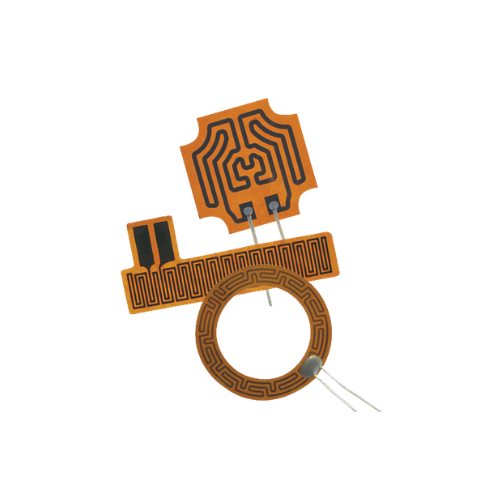
Kapton heaters are ultra-thin, ultra-flexible, lightweight and semitransparent. They derive their name from Kapton®, the polyimide film heaters this polyimide film was developed by Du Pont, and is used to encapsulate the resistive circuitry in the heater. Kapton heater have superior dielectric properties. They are fast to heat up and cool down and can operate within temperatures as low as -320°F and as high as 392°F. These heaters exhibit excellent tensile strength, durability, and dimensional stability; they are ideal for applications with size/weight restrictions. Due to the highly controlled pattern of their heating circuits which are produced through a chemical-etching process, the heat distribution generated by Kapton heaters is uniform and precise. Moreover, these heaters can endure radiation, resist many chemicals, and being low in outgassing, are suitable for vacuum applications as well.
Types of Kapton Heaters
Two types of adhesives are available to bond the different layers of a Kapton Heater; Teflon® FEP or acrylic. The choice of adhesive determines the thermal characteristics and cost of Kapton heater.
- Applications
- Selection
- Accessories
- Terminations
- Tips
- Optional Features
Typical Heating Applications of Kapton Heater:
- Vacuum Chambers
- Laser Printing
- Incubators
- Autoclaves
- Medical Equipment
- Optical Equipment
- Analytic Test Equipment
- Telecommunication Equipment
- Semiconducter Wafer Processing
Recommended Watt Densities
Because they don’t have adequate mass, Kapton heater should not be used in open air. They should always be bonded to a surface or clamped between two surfaces. The graph below is an illustration of recommended watt-densities with respect to part surface temperatures, in a process where the temperature is controlled through a temperature-controller. It should be noted that the attained temperature depends on heat-loss and the total wattage of the heater.
| Specifications of Kapton Heater | ||
| Kapton Heaters | c/w FEP adhesive | c/w Acrylic adhesive |
| Max Size | 12″ x 24″ | 12″ x 30″ |
| Thickness | 0.008″ | 0.008″ |
| Max Temp | 392°F | 300°F |
| Max Voltage | 240 VAC 125 VDC | |
| Watt Density* | 50W/in2 | 50W/in2 |
| Resistance Tolerance | -10/+10 % | |
| Dielectic Strength | 1000V | |
| Dimensional Tolerance | Up to 6″ +/- 0.030″ 6″-12″ +/- 0.060″ Over 12″ +/- 0.125″ | |
*Depending on application temperature and bonding method.
Temperature Sensors and Thermostats
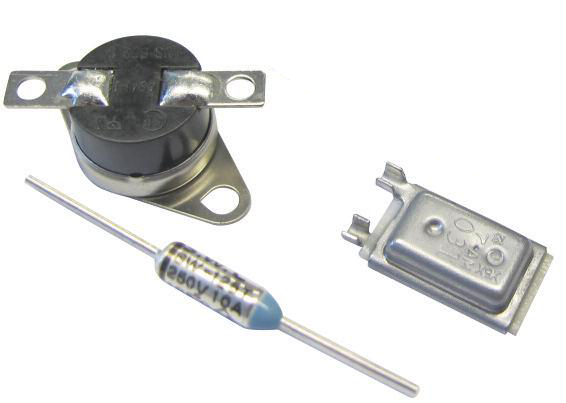
Kapton heaters can accommodate thermostats, thermal cut-offs, thermal fuses, external “J” type thermocouples and RTDs. Each of these temperature sensing and controlling devices has a specific temperature range and maximum amperage capability.
Lead Wires
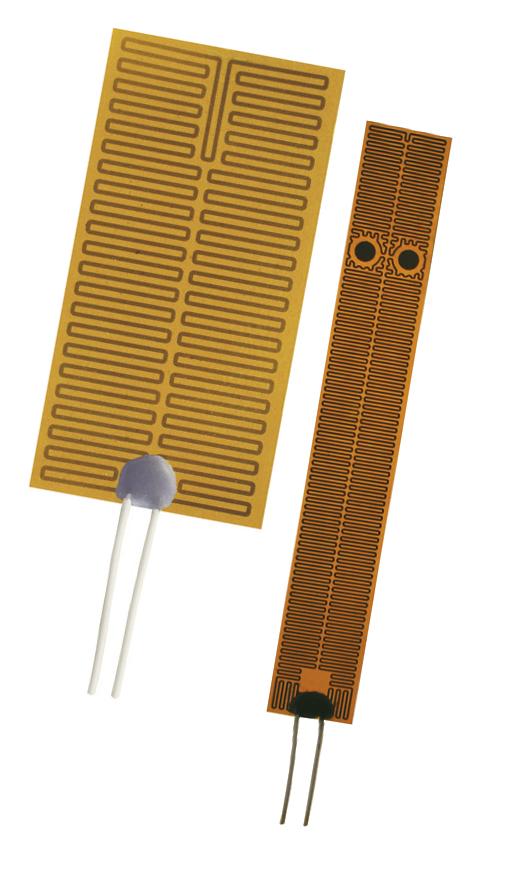
Kapton heater can have Teflon, Silicone or Kapton insulated stranded lead wires that are attached to the weld tab of the resistive circuit. The attachments are covered with high temperature epoxy. The gauge and amps of the lead wires are as follows:
| Gauge | Amps |
| 30 | 2 |
| 26 | 4 |
| 24 | 6 |
| 20 | 12 |
Attachment Methods
- The most common method to attach a Kapton heater to the surface of an application is through pressure-sensitive adhesive (PSA), which is adequate for 300°F continuous (days, weeks) and 450°F intermittent (minutes, hours) operations.
- Kapton heater could be clamped between surfaces.
- Self-fusing tape could be utilized to attach Kapton heater to cylindrical surfaces by wrapping self-fusing tape around the Kapton heater.
Optional Features of Kapton Heater
Holes and Cutouts
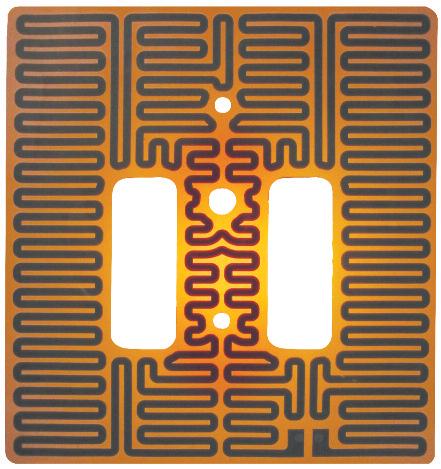
Kapton heater can accommodate holes and cutouts. If the heat loss around the edges of these perforations is substantial, the heating circuit can be designed to have a distributed wattage pattern to compensate for these losses. Kapton heater can be made with multiple zones that operate simultaneously or separately.
FAQs

What is the maximum temperature for a Kapton heater?
The max temperature of Kapton is 220°C
How are Kapton heaters made?
They are an etched foil circuit laminated between layers of Kapton with a bonding layer.
What is the average lifespan of a Kapton heater?
This can vary based on time, temperature and duty cycle.
How flexible are Kapton heaters for curved surfaces?
These heaters can typically be bent up to a 1/8” Radius bend.
What safety features are included in Kapton heaters?
They are designed with a uniform thermal pattern, but temperature sensing devices can be added.
How do Kapton heaters prevent overheating?
The heater itself can be designed with a maximum watt density that will only produce a limited output or they can be controlled externally.